
How Can Community Events Transform Your Neighborhood Into a Vibrant Social Hub?
Understanding the Critical Role of Professional Event Planning in Building Neighborhood Connections
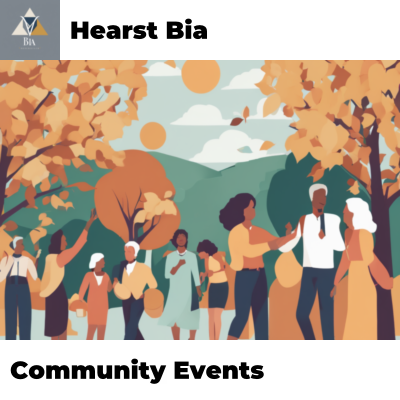
Community events serve as the lifeblood of neighborhoods, pumping vitality and genuine human interaction into streets that might otherwise feel disconnected and fragmented. When organized effectively, these gatherings transcend mere social occasions—they become transformative experiences that rewire how residents relate to one another and perceive their shared space. The orchestration of such events requires far more sophistication than most people initially recognize. Consider that successful community programming demands expertise spanning logistics, cultural sensitivity, risk management, audience psychology, and creative vision simultaneously.
Hearst Bia understands this complexity intimately. Operating from their location at 13200 Hearst Ave, New York, NY 10024 US, this organization has positioned itself as a facilitator of meaningful community experiences. The distinction between an event that generates polite attendance and one that catalyzes genuine neighborhood transformation lies entirely in the execution details. Professional planners recognize that:
- The timing of an event profoundly influences who can participate
- Venue selection communicates implicit messages about inclusivity
- Programming variety ensures representation across age groups and interests
- Accessibility features determine whether marginalized community members feel welcomed
- Post-event follow-up mechanisms strengthen bonds forged during the gathering
The sophisticated event planner grasps these nuances instinctively, whereas amateur organizers often overlook critical elements until problems emerge mid-event. This is precisely where professional community event services become indispensable to neighborhoods seeking authentic, sustainable social engagement.
The Multifaceted Benefits of Professionally Managed Community Programming
Why DIY Event Organization Often Falls Short of Expectations
When residents attempt to organize community events independently, they frequently encounter obstacles that consume excessive time, generate frustration, and ultimately diminish the event quality. The scope of concerns extends far beyond simple logistics. A neighborhood group might secure a park pavilion, send out flyers, and hope people arrive—yet this approach typically produces sparse attendance, logistical chaos, and disappointing turnout.
Professional event organizers have refined methodologies that address predictable challenges:
- Early coordination with municipal authorities regarding permits and safety requirements
- Strategic marketing campaigns calibrated to reach specific demographic segments
- Contingency planning for weather, attendance variations, and equipment failures
- Technical expertise in audio-visual setup, catering coordination, and crowd management
- Insurance and liability protocols that protect both organizers and attendees
The difference manifests vividly in practice. An amateur organizer might spend forty hours planning an event that still underwhelms. A professional coordinator—leveraging established relationships, proven templates, and technical expertise—accomplishes superior results in half the time while managing variables that the amateur never anticipated.
How Professional Events Generate Measurable Community Outcomes
Community events orchestrated by experienced professionals produce tangible benefits that extend far beyond the gathering itself. Residents report increased feelings of belonging, expanded social networks, and greater investment in neighborhood wellbeing. These outcomes emerge systematically rather than accidentally, because professional organizers intentionally design experiences that cultivate these results.
Consider the cascading effects of well-executed community programming:
- Isolated neighbors establish genuine friendships that persist long after the event concludes
- Local business owners gain visibility and establish patronage relationships with new customers
- Youth discover mentorship opportunities and community leaders identify emerging talent
- Neighborhood safety improves as residents develop investment in their shared environment
- Property values stabilize as neighborhoods gain reputations for vitality and cohesion
- Mental health markers improve within communities hosting regular social gatherings
The research supporting these outcomes continues to accumulate. Neighborhoods with robust community event programming demonstrate measurably lower crime rates, higher civic participation, and stronger economic resilience. These aren't coincidental correlations but rather predictable consequences of human connection fostered through intentionally designed shared experiences.
Strategic Event Categories That Address Diverse Community Needs
Seasonal Celebrations and Holiday Programming
Every neighborhood experiences cyclical moments—spring arrivals, summer heat, autumn transitions, winter celebrations—yet many communities fail to capitalize on these natural gathering moments. Professional event organizers recognize that seasonal events tap into deep human impulses toward gathering, reflection, and collective acknowledgment of shared time's passage.
Seasonal programming encompasses:
- Spring festivals featuring local artisans, community gardens, and outdoor entertainment
- Summer concert series, movie nights, and sports tournaments that extend evening social engagement
- Autumn harvest celebrations, neighborhood cleanups, and historical appreciation events
- Winter holiday gatherings, light displays, and warmth-focused indoor programming
Each seasonal category offers distinct organizational challenges and opportunities. Winter events, for instance, require heated indoor venues, while summer programming demands careful attention to hydration stations, shade structures, and heat-related health precautions. A professional event coordinator navigates these seasonal variations with practiced efficiency, ensuring that each season's events feel specifically calibrated to community needs rather than generic recurring occurrences.
Cultural Festivals and Heritage Celebrations
Many neighborhoods encompass residents from diverse cultural backgrounds, yet these rich traditions often remain invisible to each other. Professional community event organizers facilitate cultural festivals that create safe, welcoming spaces for communities to celebrate their heritages while inviting other residents into meaningful cultural exchange.
These events transcend performative multiculturalism. Authentic cultural celebrations require:
- Direct collaboration with cultural community leaders
- Educational programming contextualizing traditions
- Authentic food offerings prepared by community members
- Music and entertainment reflecting genuine community practices
- Accessibility considerations for elders and individuals with mobility challenges
- Follow-up discussions transforming one-time events into sustained cross-cultural relationships
The distinction matters considerably. A surface-level "cultural festival" that reduces traditions to decorations and tokenized performances alienates community members whose cultures are being represented. Professionally managed cultural events avoid these pitfalls through respectful collaboration, genuine investment, and careful attention to authentic representation.
Family-Centered Programming and Youth Engagement
Children and adolescents represent particularly vulnerable demographics when communities lack intentional programming. Professional event organizers create family experiences that feel genuinely engaging for children rather than mere adult gatherings where children tolerate attendance. Similarly, youth-specific programming provides safe spaces for adolescents to develop leadership, build peer relationships, and discover community belonging.
Family event components include:
- Age-appropriate activity stations accommodating multiple developmental stages
- Parent-child interactive experiences fostering relational bonding
- Youth volunteer opportunities building leadership competencies
- Educational components masquerading as entertainment
- Childcare provisions for very young siblings enabling genuine parental participation
- Sensory-friendly accommodations for neurodivergent children
Youth-centered programming addresses adolescents' specific developmental needs:
- Leadership development through planning and execution roles
- Peer connection opportunities in non-school contexts
- Mentorship pairings with community adults
- Skills-building workshops aligned with youth interests
- Service opportunities satisfying adolescent justice impulses
- Recognition and celebration of youth contributions
When properly designed, youth programming creates powerful ripple effects. Adolescents who participate in community events demonstrate improved academic performance, reduced behavioral challenges, and stronger prosocial orientation. These aren't accidental byproducts but rather predictable outcomes of thoughtfully designed programming that communicates genuine adult investment in young people's development.
Educational Workshops and Skills-Development Sessions
Beyond social gathering, communities benefit tremendously from programming that builds practical competencies. Professional event organizers facilitate workshops, seminars, and learning experiences addressing neighborhood needs—financial literacy, home maintenance, health information, technology skills, parenting strategies.
Successful educational programming requires:
- Expert facilitators possessing both knowledge and teaching ability
- Content calibrated to community needs and existing knowledge levels
- Interactive formats encouraging participation rather than passive reception
- Materials in multiple languages reflecting neighborhood demographics
- Childcare and transportation solutions removing participation barriers
- Follow-up resources extending learning beyond the event itself
The most effective community educational events don't simply transmit information. They create empowered learners equipped with practical tools, expanded networks, and confidence to apply new knowledge. A workshop on home weatherization, for instance, doesn't just teach insulation techniques—it connects residents with contractors, financing information, and peer support networks enabling actual implementation.
Operational Excellence in Community Event Management
Comprehensive Planning Frameworks Ensuring Nothing Gets Overlooked
Professional event management relies upon systematic frameworks that address countless moving parts. Without structured planning methodologies, even experienced coordinators risk overlooking critical details. Hearst Bia employs comprehensive approaches encompassing:
The foundational planning elements include:
- Clear event objectives articulated before any implementation begins
- Target audience identification and demographic analysis
- Budget development allocating resources strategically
- Timeline mapping with milestone markers and contingency buffers
- Venue assessment evaluating capacity, accessibility, and logistical capability
- Vendor coordination spanning catering, entertainment, technical support, and security
- Volunteer recruitment and training ensuring capable implementation
- Marketing and outreach campaigns generating attendance
- Risk assessment and mitigation planning addressing predictable challenges
- Post-event evaluation capturing lessons for future improvement
This systematic approach transforms event planning from
chaotic scrambling into orchestrated execution. Each element connects logically to others—budget constraints influence venue selection, which affects capacity assumptions, which shapes marketing messaging, which determines actual attendance patterns. Professional coordinators understand these interconnections and adjust systematically rather than improvising reactively.
Marketing Strategies That Generate Authentic Community Engagement
Many community events fail not because of poor execution but because potential attendees never learn about them. Professional event marketers employ multifaceted strategies that penetrate neighborhood awareness through channels where target audiences actually engage with information.
Effective community event marketing encompasses:
- Social media campaigns leveraging platforms where specific demographics congregate
- Neighborhood listservs and email networks reaching established community groups
- Flyer distribution at community centers, libraries, transit stations, and local businesses
- Partnerships with neighborhood associations and religious institutions
- Local media outreach generating news coverage and public service announcements
- Direct personal invitations emphasizing specific relevance to individual community members
- Multilingual materials ensuring non-English speakers receive equivalent information
- Accessibility information prominently featured in all promotional materials
- Early announcements providing sufficient planning time for family calendaring
- Reminder communications at strategic intervals before event date
The sophistication lies in audience segmentation. A professional marketer recognizes that young professionals respond to different messaging than elderly residents, that families with small children require different information than teenagers, that recent immigrants need different outreach than multigenerational residents. Calibrating messaging to resonate authentically with diverse community segments generates dramatically higher participation than generic announcements.
Accessibility Considerations Creating Genuinely Inclusive Experiences
True community events welcome everyone—yet genuine inclusion requires deliberate, specific planning rather than vague intentions. Professional event organizers understand that accessibility encompasses far more than wheelchair ramps, though physical accessibility certainly matters.
Comprehensive accessibility planning addresses:
- Physical accessibility for individuals using mobility devices or experiencing mobility limitations
- Sensory accommodations for deaf, hard of hearing, blind, and low-vision attendees
- Cognitive accessibility through clear signage, simplified instructions, and quiet spaces
- Dietary accessibility accommodating religious restrictions, allergies, and food preferences
- Transportation accessibility through public transit information and parking guidance
- Childcare accessibility enabling parents to participate fully rather than managing children
- Financial accessibility through free or low-cost entry avoiding economic barriers
- Language accessibility through translation services and multilingual materials
- Neurodiversity accommodations including sensory-friendly spaces and reduced stimulation areas
- Cultural accessibility recognizing that comfort and belonging depend on cultural responsiveness
When organizers approach accessibility as an afterthought—retrofitting ramps, finding an interpreter at the last moment—these measures feel tokenistic and often fail functionally. Professional planners embed accessibility into initial event design. Venues get selected partly for existing accessibility features. Budgets incorporate interpretation services from planning inception. Marketing reaches diverse communities through culturally appropriate channels. The result feels naturally inclusive rather than awkwardly accommodating.
Technical Expertise Managing Complex Logistical Requirements
Modern community events often involve audio-visual components, weather contingencies, crowd flow management, and technical systems requiring genuine expertise. Amateur organizers frequently underestimate these technical dimensions, resulting in malfunctioning microphones, inadequate lighting, overwhelmed parking systems, or security breaches.
Professional event coordinators possess or contract specific technical competencies:
- Audio-visual system design and troubleshooting ensuring reliable sound and projection
- Electrical load calculations preventing power failures
- Weather monitoring and contingency activation when conditions deteriorate
- Parking management and traffic flow planning preventing gridlock
- Crowd management strategies preventing congestion and ensuring safety
- Security protocols protecting attendees and preventing disruptions
- Emergency response coordination with local fire and police departments
- Equipment rental coordination ensuring appropriate tools arrive on time
- Setup and breakdown efficiency minimizing labor hours and costs
- Technology integration connecting online and in-person participation
Consider a seemingly simple outdoor concert. The professional coordinator accounts for generator capacity, backup power supplies, acoustic testing accounting for neighborhood sound environments, weather forecasting with contingency tent availability, parking coordination with neighbors, security personnel positioning, emergency medical services positioning, and communication protocols connecting all parties. An amateur might secure a band, set up speakers, and hope for the best. The professional's systematic attention ensures the event actually delivers the promised experience regardless of conditions.
Building Sustainable Community Engagement Through Strategic Event Programming
Creating Event Series Rather Than Isolated Occurrences
The most transformative community programming doesn't consist of one-off events but rather intentionally designed series building momentum and deepening relationships progressively. Professional event organizers strategically sequence programming recognizing that relationships deepen through repeated interaction, that community members develop trust through consistent experiences, and that neighborhood transformation emerges through accumulated positive experiences rather than singular moments.
Strategic series programming considers:
- Spacing events appropriately—frequent enough maintaining engagement yet sparse enough preventing fatigue
- Thematic coherence connecting events into larger narratives rather than random accumulation
- Progressive relationship deepening as regular attendees become familiar faces and eventually friends
- Skill building across events with earlier sessions establishing foundations for advanced offerings
- Leadership development identifying emerging community leaders through participation and gradually increasing responsibilities
- Seasonal variation keeping programming fresh while maintaining familiar structure
- Community feedback integration allowing resident input shaping future offerings
- Evaluation and adaptation modifying approaches based on what's working effectively
Communities that experience programming series demonstrate dramatically stronger social cohesion than neighborhoods with sporadic events. The repetition allows shy individuals to gradually become comfortable. First-time attendees discover that events consistently deliver positive experiences, generating trust in organizers' judgment. Friendships deepen through multiple casual interactions. Community leaders emerge and step into greater responsibilities. The neighborhood develops recognizable identity and shared culture.
Volunteer Mobilization Creating Distributed Leadership
Professional event organizers understand that sustainable community programming cannot depend upon paid staff alone. Rather, effective programs systematically develop volunteer leaders who gradually assume increasing responsibility. This approach both scales the organization's capacity and distributes leadership throughout the community, creating deeper engagement.
Strategic volunteer development encompasses:
- Clear entry points for individuals wanting to contribute without overwhelming commitment
- Meaningful role assignment matching volunteer interests and capabilities
- Adequate training ensuring volunteers feel competent and supported
- Recognition and appreciation celebrating volunteer contributions publicly
- Progressive responsibility increases as volunteers demonstrate capability
- Leadership development pathways transforming volunteers into event coordinators
- Mentorship pairings connecting experienced volunteers with emerging leaders
- Regular feedback and communication maintaining volunteer motivation
When executed effectively, volunteer mobilization creates extraordinary ripple effects. A volunteer recruited for a single event often remains engaged for years. That person brings expanded networks into the community. They develop leadership confidence applicable to other life domains. The community gains capacity for expanded programming. Most profoundly, residents develop genuine ownership of community programming rather than viewing themselves as passive consumers.
Addressing Common Misconceptions About Community Event Organization
Dispelling the Myth That Bigger Always Means Better
Many communities pursue maximum-scale events under the assumption that bigger events generate greater community benefit. Professional organizers recognize this as a fundamental misunderstanding. Intimate, well-designed events often generate more meaningful community impact than large-scale productions that overwhelm participants and diffuse genuine connection.
The research on group dynamics demonstrates that meaningful social connection requires manageable group sizes. Large events create spectator experiences rather than participatory ones. An intimate neighborhood potluck where everyone shares stories and learns about neighbors creates different—and often deeper—community bonds than a stadium-scale festival where people observe performances without genuine interaction.
This doesn't mean avoiding large events entirely. Rather, professional programming strategically varies scale, recognizing that:
- Small gatherings facilitate intimate connection and relationship deepening
- Medium-scale events balance participation with community-wide reach
- Large-scale events serve different purposes—celebrating community identity, attracting visibility, generating resources
- Programming series mixing scales create varied engagement opportunities
The most sophisticated community event strategies intentionally vary event scale and format, recognizing that different community members engage through different modalities. Some residents crave intimate gatherings; others feel energized by large celebrations. Strategic programming accommodates both.
Moving Beyond the Assumption That Free Always Means Accessible
Communities sometimes operate under the assumption that free events automatically welcome everyone. This represents a significant misconception. Accessibility encompasses far more than cost elimination. A free event with inadequate transportation information, no childcare, no dietary accommodations, and cultural programming that alienates specific groups remains inaccessible despite zero entry cost.
Genuinely accessible programming requires comprehensive planning addressing multiple barriers:
- Transportation accessibility through transit information and parking options
- Childcare accessibility through on-site services or family-friendly programming
- Dietary accommodations for allergies, religious restrictions, and preferences
- Cultural responsiveness ensuring specific communities feel welcomed rather than tokenized
- Physical accessibility for individuals with mobility challenges
- Information accessibility through multiple languages and formats
- Time accessibility—scheduling at times when working families and students can participate
- Social accessibility—creating welcoming environments where all feel comfortable
A professional event coordinator recognizes that true accessibility demands intentional investment. Childcare provision costs money. Interpretation services require budget allocation. Cultural consultation takes time. These investments aren't optional luxuries but